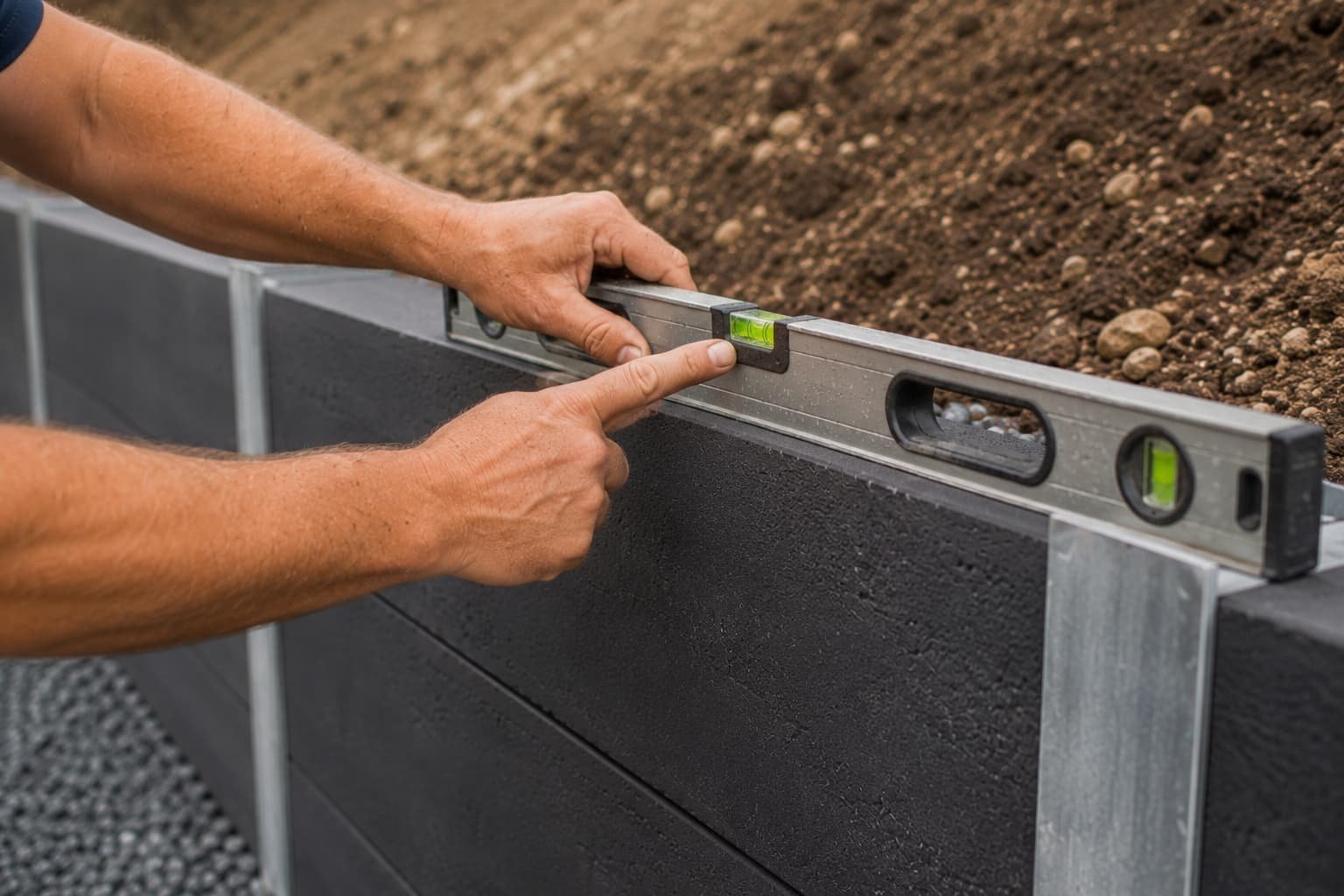
Retaining wall approval in NSW comes down to one number for most homeowners: 600 millimetres. Below that height, and meeting a handful of other conditions, a wall can often be built with no planning approval at all. Above it — or on the kind of sloping, escarpment-side land common across Wollongong — you will usually need consent before a sod is turned. This guide explains when a retaining wall is exempt, when it needs approval, and what the rules mean specifically for the Illawarra.
When a Retaining Wall Is Exempt (No Approval Needed)
Under the NSW State Environmental Planning Policy (Exempt and Complying Development Codes) 2008 — the Codes SEPP — a retaining wall can be built as exempt development, without any planning or construction approval, but only if it meets every one of the standards. In broad terms, the wall must:
- be no more than 600 mm high;
- sit at least 1 metre from any boundary;
- be at least 2 metres from any other retaining wall;
- not redirect the natural flow of surface or ground water onto a neighbour; and
- have adequate drainage connected to the existing stormwater system.
Miss any single one of those conditions and the wall is no longer exempt. Exempt status is also off the table if the land is environmentally sensitive, heritage-listed or otherwise excluded — which, as we will see, catches a lot of Wollongong blocks.
When You Need Approval: CDC vs DA
Once a wall exceeds 600 mm, sits close to a boundary, or supports more than 600 mm of earthworks, it needs approval. There are two pathways:
- Complying Development Certificate (CDC): a combined planning-and-construction approval for straightforward jobs that meet the complying development standards. A council or a private certifier can issue it, usually in a couple of weeks, without a full merit assessment.
- Development Application (DA): a full application assessed on its merits by the council. This is the path for anything that does not fit the exempt or complying rules — taller walls, boundary walls, or walls on constrained land — and it takes longer, typically several weeks to a few months.
An engineer’s design is effectively mandatory once a wall passes the exempt height, and any earthworks support more than 600 mm above or below ground level must be a certified retaining wall.
The Wollongong Difference: Escarpment and Landslip Land
Here is where the Illawarra departs from a flat suburban block. Much of Wollongong sits on or near the Illawarra Escarpment, which is mapped as a sensitive area under the Wollongong Local Environmental Plan 2009. The University of Wollongong’s landslide inventory has catalogued close to 600 slip sites across the local government area, and land on or near the escarpment carries a genuine landslip risk. On that land, the fast-track pathways generally fall away: a geotechnical report is usually required, slope stability has to be assessed, and the job typically proceeds as a development application through Wollongong City Council rather than as exempt or complying development. Flood-prone and heritage land bring their own extra controls too. The practical upshot: on many Wollongong blocks, assume you will need approval and plan for it, rather than hoping the wall slips under the exempt threshold.
Engineering and Building Standards
Any wall that needs a design is built to AS 4678, the Australian Standard for earth-retaining structures, alongside the National Construction Code. AS 4678 covers engineered walls from roughly 800 mm up to 15 metres — but it specifically excludes ground founded in landslip conditions, which is exactly why escarpment sites need a site-specific geotechnical design on top of the standard. A core-filled block or tall concrete sleeper wall on a steep block is precisely the kind of structure that needs this engineering behind it.
Who Is Allowed to Build It
Approval is only half the picture — licensing is the other half. In NSW, any residential building work over $5,000 must be carried out by a contractor licensed with NSW Fair Trading. Work between $5,000 and $20,000 needs a written small-jobs contract, and work over $20,000 also requires Home Building Compensation cover, which must be in place before the builder starts or takes any deposit. Retaining walls routinely clear the $5,000 mark, so always confirm your builder’s licence before you sign.
What Happens If You Skip Approval
Building a wall that needed approval without it is unauthorised development. Councils can issue orders to modify or demolish the work, impose fines, and the unapproved structure can cause real problems when you sell — an uncertified retaining wall shows up in building inspections and can hold up a sale. It is far cheaper and less stressful to get the approvals right the first time than to unwind a wall after the fact.
Getting Approval: The Practical Steps
- Check your land. Confirm whether your block is affected by the escarpment, landslip, flood or heritage mapping — this decides which pathway is even available.
- Get a design. For anything over 600 mm, an engineer designs the wall to AS 4678, with a geotechnical report where the site needs one.
- Choose the pathway. A certifier can issue a CDC for a compliant, straightforward wall; otherwise a DA goes to Wollongong City Council.
- Use a licensed builder. Make sure whoever builds it holds the right NSW Fair Trading licence and includes drainage in the scope.
Retaining Walls On or Near a Boundary
Boundaries are where retaining wall approvals get complicated. A wall built within a metre of the boundary loses its exempt status, and a wall that props up a neighbour’s land or redirects water onto their block raises both planning and common-law issues. It is worth knowing that a retaining wall is not the same as a dividing fence — the Dividing Fences Act generally does not force a neighbour to share the cost of a retaining wall, even where one property benefits from it, so responsibility usually falls to the owner whose land is being retained. Before you build near a boundary, talk to your neighbour early, keep the wall and its footing on your own land unless you have a written agreement, and make sure drainage carries water to your own stormwater rather than next door. Getting this right upfront avoids disputes that can stall a project long after the approval is sorted.
Frequently Asked Questions
Can I build a small garden wall without approval?
Often yes — a wall under 600 mm that meets all the exempt standards and is not on constrained land can usually be built without approval. Always check your specific block first, because the setback, drainage and land conditions all have to be satisfied.
Does a leaning or failing wall repair need approval?
A like-for-like repair usually doesn’t, but rebuilding a wall over 600 mm can trigger the same rules as a new wall. Our drainage and repairs service can tell you which side of that line your job falls on.
Who is the consent authority in Wollongong?
Wollongong City Council is the consent authority for development applications, and either the council or a private certifier can issue a complying development certificate.
Not sure whether your wall needs approval? We’ll assess your block, flag exactly what’s required, and give you a clear, itemised quote with no obligation.