Retaining Wall Drainage and Repairs in Wollongong, NSW
Drainage and repairs are what keep a retaining wall standing, and in Wollongong they are the difference between a wall that lasts decades and one that fails inside a few wet seasons. Water building up behind a wall is the single biggest cause of retaining wall failure, and with the Illawarra’s heavy rainfall most of the leaning, bulging and cracked walls we are called to have failed for exactly that reason — not bad building, but blocked, undersized or missing drainage. We install proper drainage behind new and existing walls, and we repair or rebuild failing walls before a slow lean turns into a sudden, expensive collapse.
Why Retaining Walls Fail in Wollongong
Wollongong stacks up almost every condition that puts a retaining wall under stress. The coast averages more than 1,000 mm of rain a year and elevated escarpment areas push past 1,300 mm, so walls here shed a lot of water. The reactive clays of the coastal plain swell when wet and shrink when dry, working relentlessly against anything holding them back, and the steep escarpment-foot blocks load walls harder than gentle ground ever could. When drainage cannot keep up, water saturates the backfill and builds hydrostatic pressure against the wall — and that pressure is what bows sleepers, tilts posts and cracks block. Older timber walls add their own problem as they rot from the back where the water sits. The good news is that most of this is fixable: get the water moving again with proper ag-drain, gravel and weep holes, and a wall that looked doomed will often stabilise and serve for years more.
Signs Your Wall Needs Attention
- Bulging or bowing in the face of the wall — a clear sign of pressure building behind it.
- Leaning or tilting away from the slope, or posts pulling out of plumb.
- Cracking in block or render, or split and rotting timber sleepers.
- Water pooling or seeping through the wall, or soil washing out from behind it.
- Gaps opening up between courses or at the ends of the wall.
Any of these is worth a look sooner rather than later. Caught early, a drainage retrofit or targeted repair is a fraction of the cost of a rebuild.
Our Drainage and Repairs Process
- Inspection and diagnosis. We assess the wall, the drainage behind it and the ground conditions to work out why it is moving — and whether it can be saved or needs partial rebuilding.
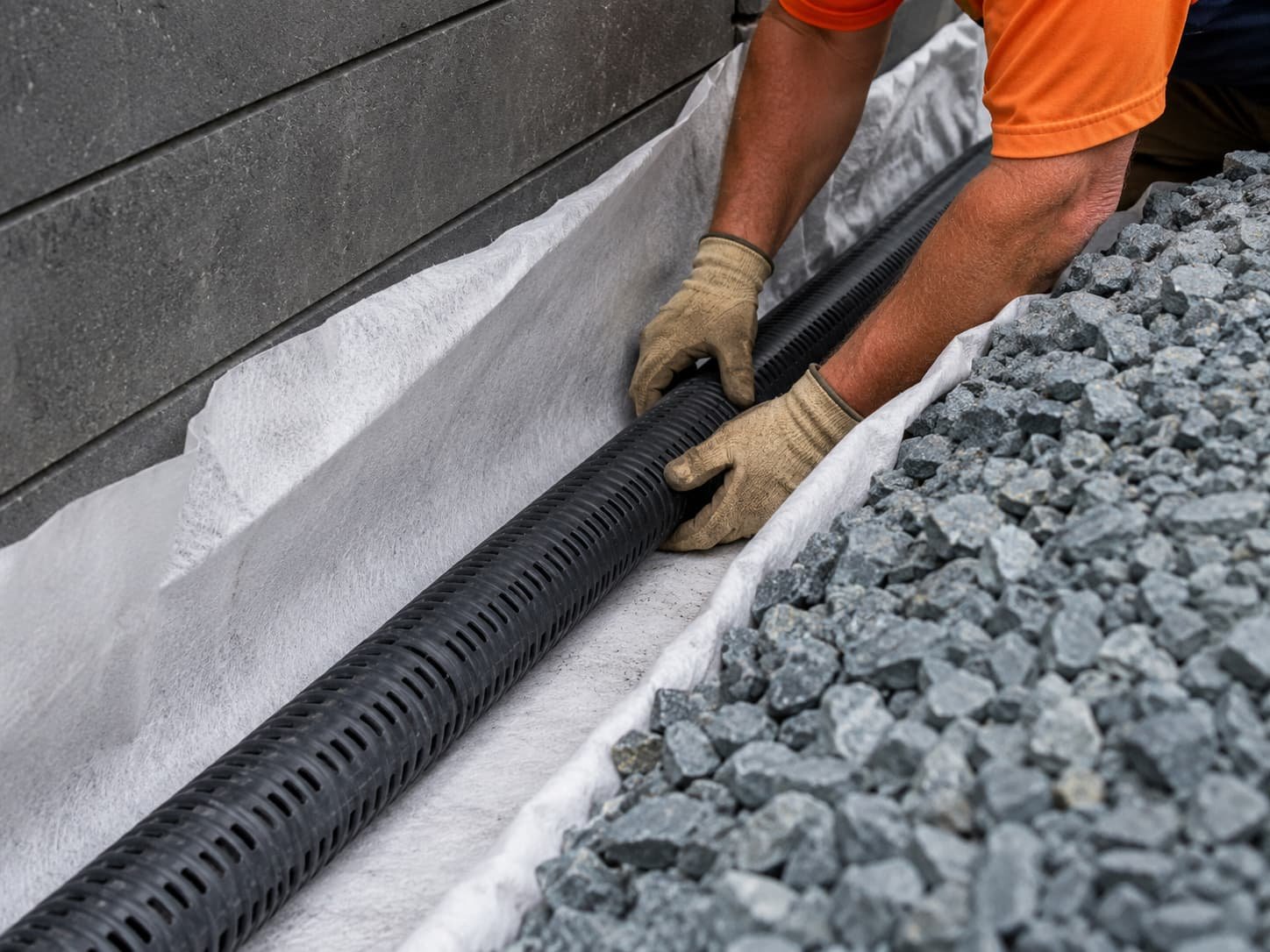
- Drainage installation. We excavate behind the wall and install or replace the system that should have been there: slotted ag-drain wrapped in geotextile, blue-metal gravel backfill and weep holes to relieve the pressure.
- Repair or rebuild. Depending on the damage, we straighten and re-anchor the wall, replace failed sleepers or block, or rebuild the worst sections while keeping what is sound.
- Backfill and finish. We backfill correctly, reinstate the surface and leave the wall draining as it should, with the ground behind it stable.
Retaining Wall Drainage and Repairs Cost in Wollongong
Repair costs vary far more than new builds because every failing wall is different, but there are useful guides. Retrofitting proper drainage behind an existing wall typically runs about $40 to $100 per lineal metre (including GST), covering ag-drain, gravel, geotextile and labour. Minor repairs — re-fixing a course, clearing and reinstating drainage, replacing a few sleepers — often start from a few hundred dollars, while straightening or partially rebuilding a significant wall commonly lands in the $2,000 to $8,000 range depending on length, height and access. A full replacement is dearer again, which is exactly why acting early pays off. We inspect first, tell you honestly whether repair or rebuild is the smarter spend, and quote it itemised.
Frequently Asked Questions
Can a leaning wall be saved, or does it need replacing?
It depends how far it has moved and why. Many leaning walls can be straightened, re-anchored and given proper drainage rather than replaced. We assess it first and only recommend a rebuild when the structure is genuinely beyond repair.
Why does drainage matter so much?
Because trapped water is the number one cause of retaining wall failure. In Wollongong’s high-rainfall, reactive-clay conditions, ag-drain, gravel and weep holes are what stop hydrostatic pressure building up and pushing the wall over.
How urgent is a bulging wall?
Treat it seriously. A bulge means pressure is already winning, and walls can go from a visible bow to a collapse quickly after heavy rain. It is far safer and cheaper to have it looked at before the next big downpour.
Do repairs need council approval?
Like-for-like repairs usually don’t, but rebuilding a wall over 600 mm, or altering it near a boundary or on escarpment land, can trigger the same NSW approval rules as a new wall through Wollongong City Council. We will flag it if your job does.
Do you work on any type of wall?
Yes — timber, concrete sleeper, block and stone. Drainage and structural repair principles apply across all of them, and we match the fix to the wall you have.
Areas We Serve
We repair and drain retaining walls across the Wollongong LGA, including Figtree, Cordeaux Heights, Farmborough Heights, Balgownie and Thirroul. Building new? See our concrete sleeper and besser block walls. Always check your builder is licensed with NSW Fair Trading before any structural work.
If your Wollongong wall is leaning, bulging or letting water through, don’t wait for it to give way. Get in touch for an honest inspection and a clear, itemised quote with no obligation.