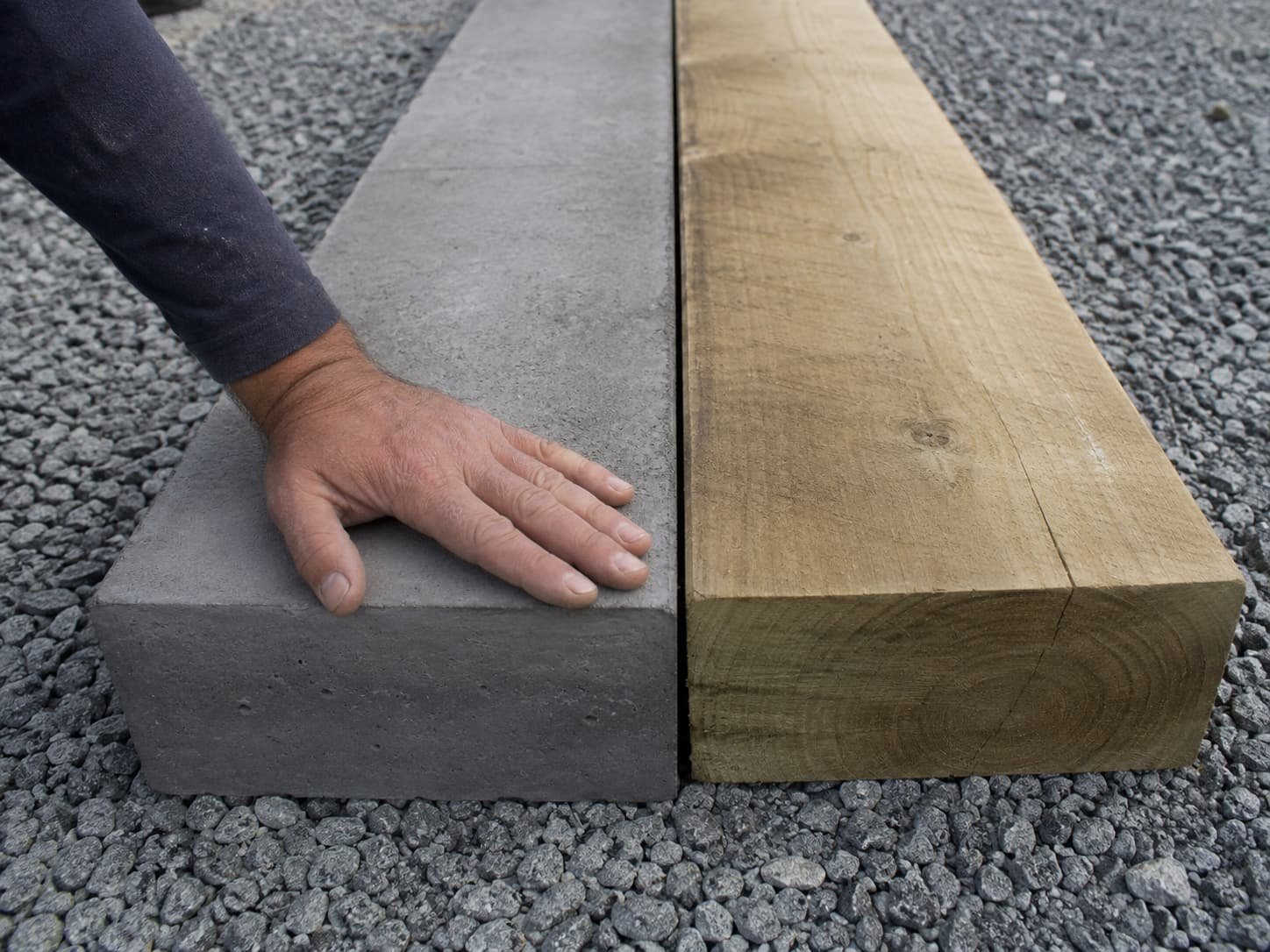
Concrete vs timber sleeper is the most common decision Wollongong homeowners face when they set out to build a retaining wall. Both are proven, widely used systems — sleepers slotted or stacked between posts — but they behave very differently over time, especially in the Illawarra’s damp, salty, sloping conditions. This guide compares the two on cost, lifespan, looks, strength and suitability for local blocks, so you can pick the right wall the first time rather than paying twice.
The Quick Answer
If you want the short version: concrete sleepers are the better long-term choice for almost any structural wall in Wollongong, lasting decades with little maintenance and standing up to the coast’s damp and salt. Timber sleepers are cheaper upfront and look softer and more natural, which makes them a fine choice for lower garden walls where budget and appearance matter more than a 50-year lifespan. The rest comes down to your budget, the height of the wall and where on your block it sits.
Cost Compared
Timber wins on upfront price. A professionally installed timber sleeper wall in the Wollongong area typically runs about $250–$450 per square metre, while a concrete sleeper wall sits around $450–$700 per square metre, both including GST, posts, drainage and labour. So timber can be 30 to 40 per cent cheaper to build. The catch is lifetime cost: because timber has a shorter life, you may be repairing or replacing it while a concrete wall is still going strong, which narrows the gap over the years. For a full breakdown, see our retaining wall cost guide.
Lifespan and Durability
This is where the two really separate. A well-built, well-drained timber sleeper wall generally lasts around 15 to 25 years in the Illawarra’s climate. A concrete sleeper wall commonly lasts 50 years or more with almost no maintenance. Wollongong’s conditions are hard on timber in particular: high rainfall keeps the ground damp, the reactive clay soils stay wet long after rain, and timber in constant ground contact is vulnerable to rot and termites. Ground-contact timber must be treated to at least H4 under Australian Standard AS 1604 for that reason, and even then it will not match concrete for longevity. Concrete sleepers, paired with galvanised steel posts, shrug off rot, termites, fire and the salt-laden coastal air.
Appearance
Timber has the edge for natural warmth. A treated-pine or hardwood wall blends into a garden and softens a landscape in a way raw concrete traditionally could not. That said, modern concrete sleepers have closed much of the gap — they come in smooth, sandstone-textured and even timber-look finishes, so you can get a natural appearance with concrete’s durability. If the wall is a feature in a planted garden, timber still appeals to many owners; if it needs to look clean and last, textured concrete is hard to beat.
Strength and Height
Concrete is the stronger system, and the difference matters as walls get taller. Timber sleeper walls are best suited to lower garden walls, generally up to around a metre. Once a wall has to hold back more soil, carry a surcharge load like a driveway, or exceed the exempt height, concrete sleepers — or a core-filled block wall — are the safer engineered choice. Any wall over about 600 mm needs a design to AS 4678 and, on escarpment land, a geotechnical assessment, and concrete simply handles those loads better than timber.
Which Suits Wollongong’s Conditions?
The Illawarra’s environment tilts the decision. The coast is wet — over 1,000 mm of rain a year, and more up on the escarpment — and the sea air is salty, both of which favour concrete and galvanised steel over timber. Many blocks sit on the sloping foothills of the escarpment, where walls carry real structural loads and where a longer-lasting material is worth the extra cost. On those steeper, load-bearing sites, concrete is usually the sensible call. Timber still has its place: a low garden wall or a decorative terrace on a gentler block, where the wall is not doing heavy structural work, is a perfectly good home for treated timber at a friendlier price. Whichever you choose, drainage is non-negotiable — ag-drain, gravel and weep holes behind the wall are what make either material last in Wollongong’s rainfall.
All retaining work, in either material, is built to meet the National Construction Code published by the Australian Building Codes Board.
How to Choose
A simple way to decide: pick timber if the wall is low (under a metre), in a garden, not carrying any structural load, and you want the lowest upfront price and a natural look. Pick concrete if the wall is taller, holding back a real load, needs council approval and engineering, or you simply want to build it once and forget it. If you want a natural stone look instead of either, our rock and boulder walls are worth a look. When in doubt, the honest answer often depends on your specific block — height, slope, soil and access all feed into it — which is exactly what a site inspection sorts out.
Installation and Maintenance
The two systems go in differently, and that affects upkeep. A timber sleeper wall is built by stacking treated sleepers between timber or galvanised posts and fixing them with corrosion-resistant bolts or coach screws — a relatively quick build, but one where the fixings and the timber both need an occasional check as the years pass. A concrete sleeper wall slots precast panels between galvanised steel H-posts set in concrete footings, so once it is up there is essentially nothing to maintain beyond keeping the drainage clear. Neither wall should ever be left without drainage: whichever material you choose, the ag-drain, gravel and weep holes behind the wall do the real work of keeping water pressure off it. In practice, timber asks for a little attention over its life and rewards you with a lower starting price, while concrete asks for almost nothing and rewards you with decades of service. Matching that trade-off to how long you plan to stay and what the wall has to do is the heart of the decision.
Frequently Asked Questions
Is concrete always better than timber?
Not always — it is better for durability and strength, but timber can be the smarter spend on a low garden wall where you do not need 50 years of life and want to keep costs down. The right choice depends on the job.
How long will a timber sleeper wall last in Wollongong?
Properly treated to H4 and well drained, around 15 to 25 years. Poor drainage or under-treated timber cuts that significantly, which is why treatment grade and ag-drain matter so much locally.
Can concrete sleepers look like timber?
Yes. Timber-look concrete sleepers give you the appearance of timber with concrete’s lifespan and low maintenance, which is a popular middle path for Wollongong gardens.
Which is better for a wall over one metre?
Concrete, without much doubt. Taller walls carry more load and usually need engineering, and concrete sleepers or block handle that far better than timber.
Still weighing it up? We’ll look at your block, talk through both options honestly and give you a clear, itemised quote with no obligation.